
Add Row
Add Element
cropper
update
Best New Finds
update
Add Element
  • Home
  • Categories
    • AI News
    • Tech Tools
    • Health AI
    • Robotics
    • Privacy
    • Business
    • Creative AI
    • AI ABC's
    • Future AI
    • AI Marketing
    • Society
    • AI Ethics
    • Security
May 24.2025
2 Minutes Read

Unlocking the Future of Healthcare: AI Support in Patient Care

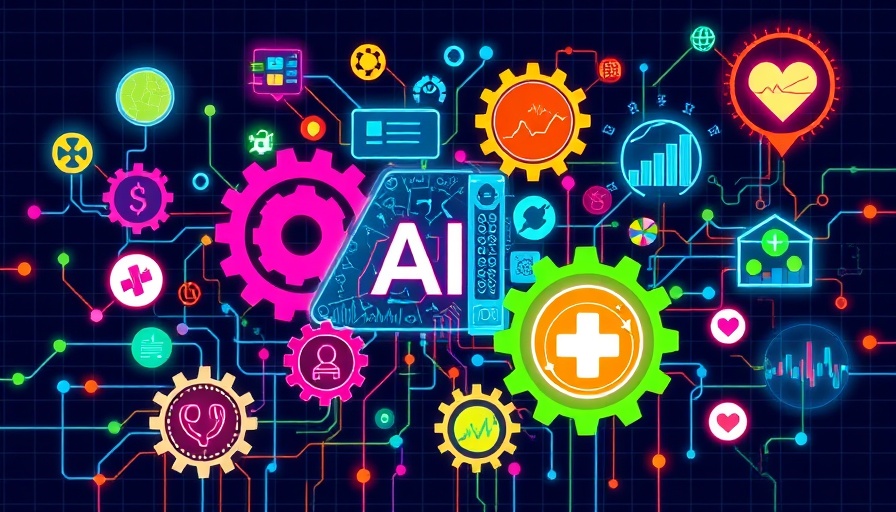
Conceptual AI integration in healthcare with symbols and charts

The Promise of AI in Patient Care

Artificial intelligence (AI) is revolutionizing patient care, making it proactive and personalized. With healthcare organizations increasingly adopting AI technologies, we see a trend towards more efficient workflows and improved patient outcomes. The integration of AI into clinical settings is no longer a futuristic dream; it's becoming a reality as providers leverage advanced tools at virtually every stage of the care journey.

Accelerating Diagnosis and Treatment Through AI

Northwell Health's introduction of an AI tool called iNAV serves as a compelling case study. This technology, designed to analyze MRIs and CT scans, has drastically reduced biopsy wait times from 22 days to just 7, and treatment durations from 56 to 34 days. By identifying cancer at earlier stages, iNAV exemplifies how AI-driven health solutions can lead to better patient outcomes and facilitate timely interventions.

Enhancing Healthcare Through Integration

As organizations implement AI tools, understanding their integration into existing workflows is vital. Experts emphasize that successful AI deployment hinges on minimizing disruption and optimizing user experiences. Dr. Sarah Pletcher highlights the importance of visualization and ease of use, advocating for solutions that fit seamlessly within healthcare professionals' routines. By prioritizing user-friendly AI applications, healthcare systems can enhance both the provider and patient experience.

The Future of Healthcare Innovation

With AI firmly anchoring its place in healthcare, the future looks promising. Innovations like iNAV won't just impact cancer care but may also extend to personalized medicine, telehealth advancements, and broader medical AI applications. This evolution signifies an unprecedented shift towards prioritizing health outcomes and patient experiences through technology, resonating deeply with healthcare professionals and patients alike.

Call to Action

For healthcare professionals and organizations, understanding the transformative potential of AI in patient care is crucial. Explore AI solutions that can streamline processes, enhance patient interactions, and ultimately improve health outcomes. Embrace the future of healthcare technology today!

Health AI

2 Views

0 Comments

Write A Comment

*
*
Related Posts All Posts
02.15.2026

Is Bryan Johnson's $1 Million Longevity Program Worth the Hype?

Update Is Longevity Worth $1 Million a Year? In an era where health and wellness are paramount, a new program offers a unique, if exorbitant, opportunity for those captivated by the concept of longevity. Bryan Johnson, a fintech mogul turned longevity advocate, has launched a controversial health program named "Immortals". This initiative invites three participants to invest $1 million each per year to follow the unique health protocols Johnson claims have helped him in his quest for a longer life. The program promises a concierge team, access to BryanAI, and extensive biological data analysis. Who is Bryan Johnson? Born in 1977, Johnson has made a name for himself not only as a successful entrepreneur but also as a figure eager to push the boundaries of health and wellness. Known for his unorthodox methods, including rumored treatments such as botox injections in unconventional places and a penchant for biohacking, Johnson embodies a blend of Silicon Valley innovation and the eccentricity of modern health trends. His willingness to livestream his personal health experiments—including the use of psilocybin, a psychedelic, for therapeutic purposes—has raised eyebrows yet also curiosity. Decoding the "Immortals" Program The particulars of Johnson’s "Immortals" program reveal a structure aimed at elite clientele. For a hefty price, participants receive a "dedicated concierge team" and access to BryanAI, a 24/7 AI health assistant designed to track and optimize their health. However, skepticism clouds this offering. Does throwing excessive resources at health guarantee better outcomes? Emerging tech trends in health and wellness emphasize personalized approaches as effective, but Johnson's approach may push practicality to its limits. Comparative Pricing of Health Programs Interestingly, while Johnson’s yearly fee is steep, alternative health programs are cropping up at lower price points. For instance, memberships at clinics like Biograph and Fountain Life offer preventative health services, but usually at less than $30,000 annually, casting doubt on whether Johnson’s offering delivers comparable value. This comparison underscores a growing market trend where preventative care initiatives are increasingly attractive to a wealthy demographic keen on longevity. The Public's Mixed Reception For many, the mere suggestion of paying a million dollars for health advice sparks disbelief and criticism. The program seems less about democratizing health access and more about maintaining exclusivity. Johnson’s model reflects a broader societal debate regarding the intersection of wealth, health, and privilege, raising questions about the efficacy of such techno-centric methods. Is this truly the pathway to immortality, or is it merely a spectacle driven by the wealthy elite's desire to defy the inevitabilities of aging? Future of Health Technology This intrigue around Johnson’s program also serves as a microcosm of the broader health technology landscape—driven by data, personalization, and cross-disciplinary collaboration. Notably, emerging technology trends bring forth discussions about AI’s role in healthcare, with the potential to reshape everything from diagnostics to personal wellness. As accessibility to these technologies expands, the conversation around health investment will undoubtedly shift. Conclusion: Should You Buy Into Longevity? The allure of living longer and better is undeniable, but it's essential for consumers to approach programs like Johnson's with caution. As the tech industry continues to evolve, it is imperative to critically assess the promises tied to health technology. The market for longevity is likely to grow, but what's clear is that an informed, skeptical consumer base may be the best safeguard against the more outrageous claims of wellness influencers.

02.12.2026

Discover How Fitbit AI Health Coach on iPhone Can Transform Your Wellbeing

Update Fitbit AI Health Coach on iPhone: A New Era in Health Tracking Fitbit has officially expanded the features of its AI Health Coach to iPhone users, marking a significant step in personalized health management. This update, which hits iOS devices in major English-speaking markets like the U.S., U.K., Canada, Australia, New Zealand, and Singapore, follows its initial rollout to Android users. With this expansion, more consumers can access AI-powered features designed for enhancing their wellness and fitness routines. Unlocking the Potential of Fitbit AI What makes the Fitbit AI Health Coach stand out is its ability to analyze personal health metrics using Google's Gemini AI technology. As users engage in conversations with the app, they can ask about their health trends, get fitness tips, and receive personalized recommendations based on their historical data and current health goals. This holistic approach addresses a common pain point for many users: managing various health data scattered across multiple apps. By integrating functions like sleep tracking, exercise planning, and general wellness advice into one platform, Fitbit simplifies the health monitoring process. Eligibility and Access: What You Need to Know However, not everyone can jump straight into using the AI features. To participate, users must meet several eligibility criteria, including having an active Fitbit Premium subscription and using a compatible device like a Pixel Watch or certain Fitbit models such as Charge 5 and Sense 2. These parameters can create a gatekeeping effect, preventing potential users from experiencing the benefits of the AI health coach. Strategies to Maximize Your Experience with Fitbit AI For those lucky enough to gain access, optimizing your interactions with Fitbit AI can yield better outcomes. Here are some best practices: Focus on one health goal: Stick to a single objective, like improving sleep efficiency or increasing daily activity levels, for a week or two. Consistency is Key: Utilize standardized questions to track your progress. For example, asking about sleep patterns weekly can help you see improvements over time. Document Changes: Keep a journal of suggested adjustments and any effects you notice, allowing you to establish whether the AI's advice is beneficial. Consult Professionals for Serious Issues: Remember, while the AI can provide health suggestions, it is not a substitute for professional medical advice. Trust and Safety in AI Health Tracking As health technologies evolve, trust and safety become paramount. The Fitbit AI Coach has been developed with safety in mind, drawing on over 100,000 hours of expert insights. However, it's crucial that users maintain realistic expectations and understand the limitations of this AI in providing medical advice. What This Means for the Future of Health Technology The expansion of Fitbit's AI to iPhone not only showcases Google's confidence in wearable health technology but also creates a competitive landscape as major tech companies, like Apple, navigate their health initiatives. With ongoing advancements in AI and potential integrations, users might witness a greater dependence on technology for personal well-being, expanding beyond simple fitness tracking into deeper health management. Conclusion: Embrace the Change in Health Management The introduction of the Fitbit AI Health Coach offers a compelling glimpse into the future of personalized health. As users experiment with this technology, it is essential to approach it with an understanding of its potential and limitations. Engaging actively with the AI can lead to better health outcomes and encourage ongoing dialogue about how technology can enhance our everyday lives.

02.13.2026

How AI Can Read Brain MRIs in Seconds: Revolutionizing Emergency Care

Update AI Revolutionizing Brain MRI Analysis: Meet 'Prima' In an era where technological innovations are reshaping healthcare, the University of Michigan's recently developed AI, dubbed 'Prima,' has taken a giant step forward. Capable of reading brain MRIs in mere seconds, Prima harnesses the power of AI to increase the efficiency, accuracy, and overall effectiveness of neurological diagnostics. The Need for Speed in Diagnostics As the demand for MRI scans continues to surge globally, the overwhelming pressure on neuroradiology services often leads to bottlenecks in diagnosis. Traditional MRI interpretations can take days. With incidents like strokes or brain hemorrhages requiring immediate medical attention, the time taken to interpret full MRI scans can be the difference between life and death. According to Todd Hollon, M.D., the neurosurgeon behind Prima, quick turnaround times are essential for timely diagnosis. In tests involving over 30,000 MRI studies, the AI showed diagnostic accuracy levels as high as 97.5% while significantly reducing workload on radiologists. This innovation could prove revolutionary for hospitals struggling with increased patient volume and reduced medical professional availability. A Leap Forward in AI Technology Unlike previous models that were trained on narrow datasets focusing on specific anomalies, Prima utilizes a broader dataset of more than 200,000 MRI studies and 5.6 million imaging sequences. This multifaceted approach allows the model to analyze and integrate clinical histories with imaging data more effectively, enabling a comprehensive evaluation. Considered a 'vision language model,' Prima not only recognizes visible anomalies but also offers crucial insights into the patient's history, functioning like an assistant to radiologists rather than replacing them. This dynamic makes it a co-pilot in medical imaging, similar to how AI tools assist users in drafting texts or emails. Implications for Global Health Prima’s potential reaches beyond just efficiency. By enhancing diagnostics in areas with limited access to radiologists, especially in rural regions or under-resourced environments, it could help alleviate the healthcare disparities prevalent worldwide. Vikas Gulani, M.D., a co-author of the study, emphasizes the importance of innovative technologies like Prima in improving radiology access. The developers also ensured that the AI system promotes algorithmic fairness across various demographics, crucial in ensuring equitable healthcare delivery. What’s Next for Prima? With the promising results of this AI model, researchers are planning to refine its capabilities by incorporating more comprehensive electronic medical record data and expanding its application beyond MRIs to other imaging modalities like mammograms and X-rays. The focus will be on achieving holistic integration to mirror how clinical decisions are made in real-time. As we forge ahead into this new frontier of AI technology, tools like Prima exemplify the convergence of healthcare and technology, offering not just enhanced diagnostic accuracy but also redefining the landscape of patient care itself.

Terms of Service

Privacy Policy

Core Modal Title

Sorry, no results found

You Might Find These Articles Interesting

T
Please Check Your Email
We Will Be Following Up Shortly
*
*
*

