
Add Row
Add Element
cropper
update
Best New Finds
update
Add Element
  • Home
  • Categories
    • AI News
    • Tech Tools
    • Health AI
    • Robotics
    • Privacy
    • Business
    • Creative AI
    • AI ABC's
    • Future AI
    • AI Marketing
    • Society
    • AI Ethics
    • Security
July 12.2025
3 Minutes Read

Exploring the Human Mind: Why It Learns Differently From AI

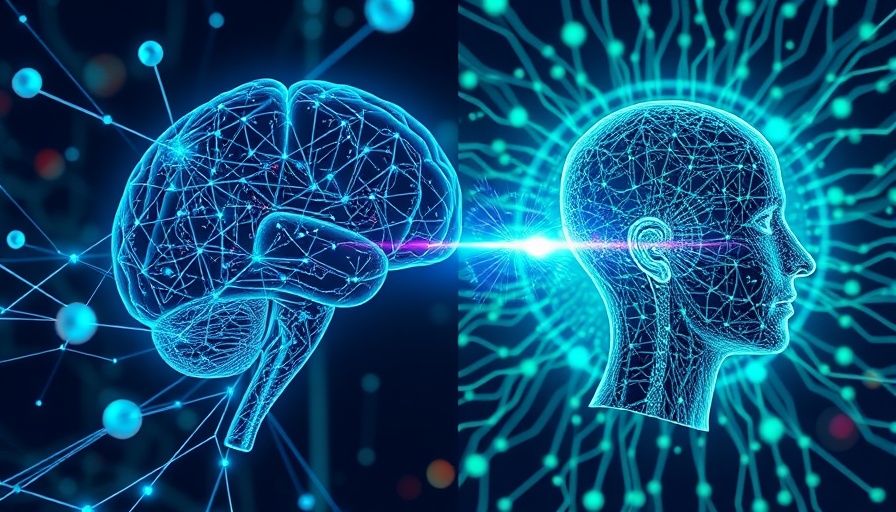
Abstract depiction of differences between human brain and AI, futuristic concept.

The Unique Differences Between Human Intelligence and AI

As artificial intelligence (AI) continues to evolve, a pressing question arises: how do human brains differ fundamentally from AI systems? It's a quest for understanding that delves deep into the cognitive processes that define humanity. While AI can process vast amounts of data quickly and efficiently, the way it 'thinks' is not analogous to human thought. Humans draw on a rich tapestry of experiences, emotions, and senses to form memories and foster creativity. This amalgamation influences decision-making and problem-solving in ways that AI cannot replicate.

Understanding the Human Experience

Every personal experience shapes our cognitive architecture, leading us to unique conclusions and creative insights. For instance, a student who struggles with math may discover innovative techniques that help them learn, not because they inputted data into an AI engine, but because they utilized their personal history of challenges and success. Emphasizing this distinction can help society appreciate the nuanced role of human intuition and creativity in contrast to raw computational power.

The Evolution of AI

AI technologies may mimic certain human functions, but they operate through algorithms and data analysis rather than the mental frameworks emerging from human experience. This insight provides a fascinating perspective on how we integrate technology into our lives. For instance, deep learning models, initially inspired by the human brain's neural networks, can identify patterns in data but lack the emotional context that shapes human cognition. As we approach the era of advanced AI, understanding these distinctions becomes essential to leveraging AI while cherishing the irreplaceable human touch.

Future AI Trends: Balancing Efficiency and Emotion

Looking ahead, the intersection of AI and human capabilities will continue to be a hot topic in technology and society. Experts predict that businesses will increasingly rely on AI for operational efficiency while simultaneously recognizing the importance of human insight in customer relations and creative processes. A business that balances both can create a harmonious environment where human input enriches AI performance. Consider how companies utilize AI-driven analysis alongside human creativity to craft engaging marketing campaigns or develop innovative products. This synergy is where the future of collaboration lies.

Learning to Embrace AI: What It Means for Us

As students and young professionals encounter AI in their careers and education, understanding its implications becomes crucial. Embracing AI does not mean sacrificing human originality or emotional intelligence; instead, it means augmenting our abilities. By acknowledging the differing capabilities of AI and humans, we can foster collaboration where AI acts as a partner, enhancing human effort rather than overshadowing it. This perspective encourages personal development through technology rather than fear of obsolescence.

Final Thoughts: Human Intelligence and AI Collaboration

In conclusion, appreciating the differences between human intelligence and AI allows for a forward-thinking approach to technology. As we progress into a future where AI permeates various aspects of living, our ability to adapt, integrate, and grow with these advancements will define how we thrive personally and collectively.

To learn more about the evolving landscape of AI and its role in our lives, consider exploring introductory materials and resources on AI principles, which can empower you to engage with this exciting field.

Amazing AI

3 Views

0 Comments

Write A Comment

*
*
Related Posts All Posts
01.14.2026

Anthropic's Leadership Shake-Up: A New Era of AI Innovation

Update Anthropic's Bold Move in AI Innovation In a dynamic shake-up within its leadership structure, Anthropic has announced that Mike Krieger, the Instagram co-founder and chief product officer, will transition to co-lead the company’s internal incubator known as the Labs team. This change not only highlights the company's commitment to fostering innovative AI products but also illustrates a significant shift in how tech organizations are approaching product development in the fast-paced AI landscape. The Purpose Behind the Restructuring This strategic move comes amid intensifying competition among AI startups and established tech giants. As Krieger emphasized, "We’ve reached a watershed moment in AI—model capabilities are advancing so fast that the window to shape how they’re used is now." His shift from a C-suite role to a position focused on hands-on building underscores the urgency for companies like Anthropic to adapt quickly, experimenting with new concepts and technologies without the traditional constraints of corporate hierarchy. Expanding the Labs Team The Labs team, which started with just two members in mid-2024, aims to significantly expand its personnel in the coming months. Anthropic plans to double the team's size, seeking to create a culture of rapid prototyping which they believe is crucial for success. This approach echoes trends seen in other AI companies, such as OpenAI's iterative product development strategies. The Bigger Picture of AI Advancement Anthropic’s restructuring signals a shift in how AI firms operate; with everyone from heavyweights like Apple and Google ramping up their AI offerings, speed and innovative product development are essential. As Daniela Amodei, Anthropic's president, noted, "The speed of advancement in AI demands a different approach to how we build, how we organize, and where we focus." This sentiment speaks volumes about the industry's current urgency to deliver high-quality AI solutions that can tackle complex human challenges. A Glimpse into the Future of AI As we venture further into the AI era, the implications of Anthropic's decisions will likely resonate across multiple sectors, from healthcare to consumer services. With AI increasingly becoming an enabler of efficiency and innovation, this shift creates exciting opportunities for businesses eager to leverage AI’s capabilities. The question remains: How can companies ensure ethical use while navigating this rapidly evolving technology landscape? Call to Action: Stay Ahead of AI Trends As AI technology continues to transform multiple industries, it's essential to stay informed about the latest developments and trends. Explore how businesses are leveraging AI to improve operations, enhance customer experiences, and create innovative solutions. The future of AI is here—are you ready to embrace it?

01.13.2026

Discover How AI Can Transform Your Workday with Anthropic's Cowork Feature

Update Anthropic’s Bold Move: Cowork Transforms AI AgentsIn the rapidly evolving landscape of artificial intelligence, Anthropic has unveiled a groundbreaking feature called "Cowork" for its AI agent Claude, aimed at making AI accessible to non-technical users. This launch marks a significant step toward integrating AI into everyday tasks, effectively bringing the capabilities of their popular coding tool, Claude Code, into a more user-friendly format.Revolutionizing Tasks with AICowork allows users to grant Claude access to specific folders on their desktops. This innovation enables the AI to perform a variety of tasks, such as organizing downloads and generating spreadsheets from receipts, without needing technical expertise. As detailed by Anthropic, users can interact with Claude similarly to how one would collaborate with a human coworker—issuing commands while allowing the AI to work at its own pace. This approach replaces the traditional, often cumbersome back-and-forth interaction typically seen with AI chat interfaces.The Impact on Everyday UsersFor tech enthusiasts, students, and early-career professionals, Cowork represents a significant shift in how AI can be utilized in various fields—ranging from education to business operations. Imagine being able to create a comprehensive report or analyze sales data just by giving Claude access to your files! Furthermore, the integration with productivity tools like Asana and Notion allows for seamless task management.Concerns and ResponsibilitiesHowever, as exciting as this advancement is, it also comes with inherent risks. Anthropic has been transparent about the potential dangers of granting AI access to personal files, including the risk of prompt injection attacks. Since AI has the capacity to modify and delete files, providing clear and precise instructions is crucial for safe usage. This transparency is commendable, presenting a responsible approach to AI deployment that prioritizes user security.Looking Ahead: The Future of AI AgentsAs Cowork is still in its research preview phase and currently limited to macOS, many are curious about its potential evolution. The opportunity for cross-platform availability and further feature development, such as cloud integration and deeper software capabilities, could enhance productivity across various industries. Furthermore, as AI continues to advance, its role in business, healthcare, and everyday tasks will undoubtedly expand, prompting a growing conversation around the ethical use of AI technologies.For those eager to explore how AI like Cowork can impact daily tasks and improve operational efficiencies, this feature symbolizes just the beginning of AI's integration into the workspace. Embracing these innovations not only opens doors but also requires us to consider how to responsibly navigate the challenges that accompany revolutionary technology.

01.12.2026

Exploring Google's AI Inbox: The Future of Email Management for All

Update Introducing Google’s Ambitious AI Inbox Google recently stepped into a transformative venture with its AI Inbox for Gmail, a fundamental shift aiming to enhance how users engage with their email. This new approach doesn’t just replace the traditional email list; it reimagines inbox management through AI-generated summaries and task suggestions. While many tech enthusiasts are already buzzing, I want to dissect whether this development truly aligns with user needs and email efficiency. The Potential Impact of AI on Email Management Right now, the AI Inbox remains exclusive to selected testers. As users navigate through this tool, they’re observing AI’s potential to take over daunting tasks like email sorting and reminding users of critical follow-ups. But how can AI truly improve customer experience in business settings, particularly in a tool as ubiquitous as email? The heart of this innovation lies in its design, which leverages algorithms to identify significant emails and transform how users manage these communications. Challenges in AI Inbox Implementation However, not all that glitters is gold. For me, the AI Inbox is still a work in progress. Merging AI’s intelligence into personal preferences raises questions. Irrelevant summaries and automatic suggestions may clutter my already organized email setup. This could be a significant challenge for many users who take pride in a tidy inbox. Understanding the boundaries of AI tools in human behaviors and preferences is crucial if Gmail wants to deliver an experience that resonates. Why AI Ethics Matter for Innovations Like AI Inbox As we embrace these innovative tools, it’s vital to navigate the potential ethical considerations surrounding AI, particularly in maintaining user privacy. How can we ensure ethical use of AI throughout its development? Users must be educated on what these tools track and how they could influence our communication dynamics. The Future of AI in Email Management The overall impacts of integrating AI in email services hint at a future where technology helps simplify our digital lives, redefining customer relations in various sectors, from healthcare to marketing. Yet, we remain at a crossroads, pondering how AI will continue to evolve. The key question remains: how can we leverage this technology not only to enhance operations but to ensure it respects users' desires for privacy and control? Ultimately, Google’s AI Inbox may shape the future of how we communicate digitally. As we await its broader release, it’s crucial to remain observant of its impact. Staying informed on the latest innovations in AI technology can help us adapt and thrive as these advancements continue to change our world.

Terms of Service

Privacy Policy

Core Modal Title

Sorry, no results found

You Might Find These Articles Interesting

T
Please Check Your Email
We Will Be Following Up Shortly
*
*
*

