
Add Row
Add Element
cropper
update
Best New Finds
update
Add Element
  • Home
  • Categories
    • AI News
    • Tech Tools
    • Health AI
    • Robotics
    • Privacy
    • Business
    • Creative AI
    • AI ABC's
    • Future AI
    • AI Marketing
    • Society
    • AI Ethics
    • Security
June 13.2025
3 Minutes Read

Coco Robotics Receives $80 Million Boost: What This Means for Future Robotics

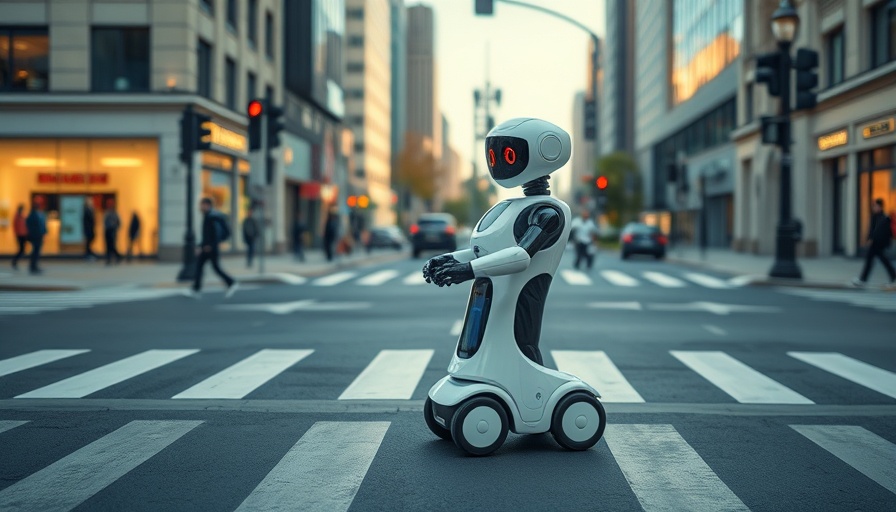
Delivery robot at city intersection representing future of robotics.

Step into the Future of Robotics: Coco Robotics' New Milestone

As the demand for efficient and sustainable delivery solutions skyrockets, the spotlight shines on Coco Robotics, a disruptive startup based in Los Angeles. Backed by industry leader Sam Altman, the company has successfully raised $80 million in funding, demonstrating the growing potential for last-mile delivery robots in an increasingly digital marketplace. Since launching their zero-emissions robots in 2020, Coco has completed over 500,000 deliveries, partnering with major retailers such as Subway and Jack in the Box. This latest funding round brings their total to over $120 million, which is significant for a company just a few years old.

How AI and Robotics Intersect in Coco's Vision

Coco Robotics not only focuses on revolutionary delivery solutions but also leverages AI technology trends. One of the most noteworthy aspects of their business model is a partnership with OpenAI. This collaboration allows Coco to gather real-world data to enhance AI algorithms while integrating AI-powered technology into their operational processes. This synergy emphasizes the future of robotics and opens the door to innovations that can reshape logistics.

Why This Matters: The Broader Implications of Robotics Innovations

The impact of Coco Robotics and similar companies extends beyond mere convenience; they signify a broader shift towards sustainable technology. As consumer preferences evolve and environmental concerns gain priority, solutions like autonomous delivery not only address these changes but also pave the way for futuristic technologies. Startups in this space are not just about cutting costs; they contribute to the economic landscape by creating new opportunities and jobs we haven’t yet imagined.

Navigating Disruptive Innovations in the Delivery Sector

The rise of autonomous delivery systems reflects a significant tech evolution in the logistics sector. Companies are investing heavily in research and development, indicating a shift toward intelligent systems capable of improving efficiency and user experience. Much like the advent of 5G technology developments has transformed communication, the integration of robotics into everyday logistics illustrates the potential for disruptive innovations shaping the future.
In a world that constantly seeks streamlined solutions, it's evident that the robot delivery trend signifies merely the beginning of a much larger technological shift.

Key Takeaways for Tech Enthusiasts and Investors

For those interested in emerging tech trends, this funding round is a clear indicator that stakeholders are placing high value on companies like Coco Robotics. As we delve deeper into 2025, it will be crucial for tech enthusiasts and investors to monitor such players in the field of robotics. Factors such as operational efficiency, data integration, and environmental impact will likely drive consumer and investor interest moving forward.

Conclusion: Join the Conversation on the Future of Robotics

The remarkable journey of Coco Robotics underscores a pivotal moment in the arena of robotics technology. As barriers of entry fall and new partnerships flourish, this startup represents the forefront of a wave of advanced technologies that could redefine our interaction with logistics. For those keen on technology's trajectory, now is the time to engage with these innovations that promise to reshape how we perceive everyday errands.

Robotics

3 Views

0 Comments

Write A Comment

*
*
Related Posts All Posts
01.10.2026

Tiny Autonomous Robots Smaller than Salt: A Breakthrough in Future Technology

Update The Dawn of Microscopic Robotics: A Breakthrough in Technology In an exciting leap for robotics, researchers from the University of Pennsylvania and the University of Michigan have engineered microscopic robots measuring just 200 by 300 by 50 micrometers—smaller than a grain of salt. These revolutionary machines can swim, sense their environment, and make autonomous decisions, marking a significant milestone in the field of future robotics. Powered by light and equipped with intricate internal systems, these robots are poised to become an integral part of advanced manufacturing and personal health monitoring. How Do These Tiny Robots Operate? Unlike conventional robots, which often rely on moving parts to execute tasks, these microrobots utilize a unique method of propulsion that generates electric fields in liquid to move without physical mechanisms. This transformative approach enables them to navigate their surroundings effectively while withstanding the challenges posed by their minuscule size, where forces such as drag and viscosity dominate movement dynamics. Applications in Health Monitoring: The Future of Healthcare The tiny robots hold tremendous potential for healthcare applications, particularly in monitoring individual cells within the human body. Being able to detect temperature changes and collectively work as a group opens up new avenues for real-time health diagnostics. As Marc Miskin, assistant professor at Penn Engineering stated, "This opens up an entirely new scale for programmable robots," and suggests future uses could include monitoring cellular health or even targeted drug delivery. The Significance of Autonomous Microscopic Robots These groundbreaking robots are the first fully autonomous machines capable of functioning at this miniaturized scale, operating for months on end while costing approximately one cent each to fabricate. As the technology matures, we might witness a transformation in how we approach emerging tech trends across various industries, paving the way for intelligent systems that work seamlessly within their physical environments. What Lies Ahead in Microscopic Robotics? The research into tiny robots is only the beginning. With advances in AI technology trends and miniaturization, we are likely to see not only greater complexity in robotic programming but also innovations that enhance the cognitive functions of these robots. As highlighted by Miskin, the future could welcome robots capable of complex data analysis and decision-making, heralding a new era in technological evolution.

01.05.2026

Can Text Finally Make Robots Dance Like We Want? Discover the Future of AI Motion Generation

Update The Challenge of Text-to-Motion GenerationFor years, the field of robotics has struggled with a key question: can text effectively guide robots to move in the way we desire? The recent advancements made by HY-Motion 1.0 in text-to-motion generation reveal a potential breakthrough in this area. Traditional models have had difficulty interpreting complex emotional and physical movements, often producing robotic and unnatural actions. This has led to a significant gap between the precision of AI in understanding text and the fluidity required in motion.The Role of Scale in AI DevelopmentThe scaling hypothesis suggests that increasing the parameter count in AI models can unlock new capabilities. Just as GPT-2 showed remarkable improvements at larger scales, so does HY-Motion, with its billion-parameter model designed to better understand intricate instructions. By utilizing a framework that embraces extensive and rich training data, HY-Motion can generate motion that adheres more closely to user directives, opening up new avenues in fields like animation and game development.Importance of Quality Data in TrainingA pivotal aspect of the HY-Motion project is the emphasis on clean, well-annotated data. This is crucial; without it, AI can learn misleading patterns that hinder its ability to generate realistic outcomes. For instance, motion capture data can be riddled with inconsistencies, and poorly constructed text descriptions can lead to misinterpretations. HY-Motion's meticulous processing pipeline ensures high-quality input, thereby enhancing the model's effectiveness in interpreting motion.Looking Ahead: The Future of AI-Driven MotionThe implications of these advancements extend beyond just making robots “dance.” As AI continues to evolve, the interplay between deep learning models and creative processes will shape multiple industries, allowing for greater innovation in virtual reality, entertainment, and interactive media. With the right tools and understanding, the journey from text to motion could transform not only robotics but also how we create and interact with digital environments.

12.22.2025

The iRobot Bankruptcy: A Deep Dive into Regulatory Barriers and Future Robotics Innovations

Update The Rise and Fall of iRobot: A Cautionary Tale When news broke that iRobot had filed for Chapter 11 bankruptcy, many tech enthusiasts and consumers alike felt a sense of loss. Founded on the principles of innovation and problem-solving, iRobot had become synonymous with consumer robotics, especially with the success of its flagship product, the Roomba. Over 50 million units sold since its inception in 2002 is a testament to its impact on homes worldwide. Yet, despite its notable achievements, the company's downfall reveals much about the challenges tech firms face amidst evolving regulatory landscapes. The Impact of Regulatory Scrutiny on Innovation Colin Angle, iRobot's co-founder and former CEO, described the events leading to bankruptcy as an “avoidable tragedy.” The anticipated merger with Amazon, a deal worth $1.7 billion, was seen as a pivotal moment for iRobot to regain its competitive edge. However, regulatory bodies, including the FTC and the European Commission, raised flags, leading to an 18-month investigation that ultimately derailed the acquisition. Angle argues this drawn-out process was counterproductive, suggesting that regulators failed to recognize the innovative potential this merger held for the company. The Lessons for Entrepreneurs and the Tech Ecosystem Angle's critique points to significant implications for aspiring entrepreneurs. Regulatory agencies are right to ensure a competitive market, but prolonged scrutiny can stifle innovation. In Angle’s view, the iRobot-Amazon merger would have led to an influx of innovation and consumer choice in the robotics market, at a time when the company's market share was declining amid fierce competition from brands like Anker and Roborock. The story serves as a warning that overly cautious regulatory frameworks might inadvertently hinder the very innovation they aim to protect. Setting a New Course: Future Innovations in Robotics Moving forward, Angle remains optimistic, intending to channel his expertise into new ventures within consumer robotics. As the field rapidly evolves, next-generation technologies continue to emerge, giving rise to new opportunities. The rising importance of AI in robotics is evident—AI-powered tools can enhance functionality, efficiency, and user experience. Whether it’s autonomous machines managing household chores or advanced algorithms powering telemedicine solutions, the landscape is ripe for innovation. AI-Powered Technologies: The Future of Robotics The integration of AI technologies into robotics is not just about automation; it’s about enhancing the quality and complexity of tasks these machines can perform. As robotics research progresses, the potential applications span various sectors, from healthcare innovation to industrial automation. For instance, imagine AI robots not just vacuuming floors, but also assisting in elderly care or performing complex surgical procedures. This vision of the future robotics universe will demand innovative thinking from entrepreneurs and substantial investment from stakeholders. Conclusion: A Call for Balanced Innovation Regulation iRobot's journey underscores the challenges faced in the intersection of innovation and regulation. As tech enthusiasts and future innovators watch closely, there is an urgent need to advocate for a regulatory environment that supports rather than stifles growth. For aspiring technologists, the path forward should prioritize collaboration with regulators to carve out frameworks that promote innovation while ensuring consumer protection. As we look to the future, let us remember the lessons from iRobot’s saga and support policies that enable the next wave of innovations in robotics and AI technologies. Your voice matters in this dialogue; engage with policymakers, advocate for sensible regulation, and push for a tech landscape that allows creativity to flourish.

Terms of Service

Privacy Policy

Core Modal Title

Sorry, no results found

You Might Find These Articles Interesting

T
Please Check Your Email
We Will Be Following Up Shortly
*
*
*

